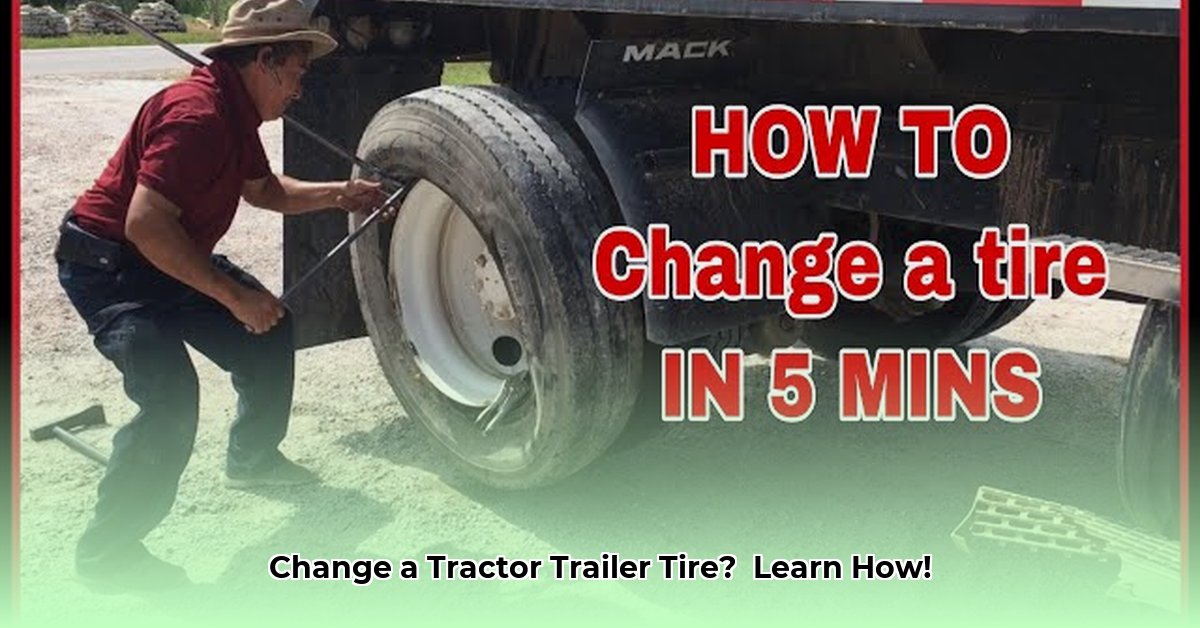
Changing a tractor-trailer tire is a demanding task requiring strength, the right tools, and a meticulous approach. This guide provides a step-by-step process, prioritizing safety and offering solutions for common challenges. Remember, if you're uncomfortable with any step, consult a qualified mechanic. For smaller tires, see our guide on lawn tractor tire replacement.
Tools and Materials Checklist
Before you begin, gather all necessary tools and materials. A complete checklist ensures a smoother, safer process.
| Item | Description | Importance |
|---|---|---|
| Safety Glasses | Protect your eyes from flying debris. | Critical; prevents eye injuries from flying debris. |
| Heavy-Duty Work Gloves | Protect your hands from cuts and scrapes. | Essential; protects against cuts, abrasions, and potential chemical contact. |
| Steel-Toe Boots | Protect your feet from heavy objects and potential crushing. | Crucial for safety; heavy equipment poses serious foot injury risks. |
| High-Visibility Vest | Increases your visibility to others around the truck. | Important, especially in low-light conditions or busy areas. |
| Heavy-Duty Jack | Rated for the weight of your trailer (check the rating carefully!). | Absolutely crucial; an underpowered jack is incredibly dangerous. Capacity must exceed the trailer axle weight. |
| Wheel Chocks | To prevent the truck from rolling. | Essential safety measure; prevents accidental movement of the vehicle. |
| Lug Wrench (Breaker Bar or Impact Wrench) | For loosening and tightening lug nuts; a breaker bar provides extra leverage. | Saves time and effort, especially with stubborn nuts. An impact wrench is even faster but requires compressed air. |
| Torque Wrench | For tightening lug nuts to the manufacturer's specified torque. | Essential to prevent loosening and ensure tire safety. Improper torque can lead to wheel detachment. |
| Tire Irons/Pry Bars | To help pry the tire bead from the rim. | Necessary for tire removal; multiple irons are often needed. |
| Grease or Lubricant | To make tire removal and installation easier. | Reduces friction, aiding removal and installation, and minimizing damage. |
| Air Compressor | To inflate the tire to the correct pressure. | Essential; provides sufficient air pressure to safely seat the tire bead. |
| Bead Breaker (Optional) | A tool that significantly eases bead separation from the rim. | Highly recommended, especially for larger tires; this reduces strain and risk of injury. |
Safety Precautions: Prioritizing Your Well-being
Safety is paramount. Before beginning, take these crucial steps:
- Secure Parking: Park on a level, stable surface, away from traffic and hazards.
- Wheel Chocks: Securely place wheel chocks behind the wheels not being changed.
- Clear the Area: Ensure the area around the truck is clear of obstacles and personnel.
Step-by-Step Tire Change Instructions
Follow these steps carefully and methodically. Rushing increases the risk of injury or damage.
- Engage the Brake: Firmly engage the parking brake. Double-check to ensure it's secure.
- Loosen Lug Nuts: Use the lug wrench to slightly loosen the lug nuts before jacking. This prevents the nuts from being difficult to remove when the wheel is lifted.
- Jacking: Carefully position the jack under the trailer's frame near the flat tire. Raise it slowly and steadily until the tire is fully off the ground.
- Remove Lug Nuts and Wheel: Once fully lifted, completely remove the lug nuts. Keep the nuts together in a safe place to avoid loss. Remove the wheel assembly.
- Bead Breaking (With Bead Breaker): If using a bead breaker, follow the manufacturer's instructions carefully. This is the safest method.
- Bead Breaking (Manual): Manually breaking the bead requires tire irons. Take your time, applying force evenly to avoid rim or tire damage.
- Mount New Tire: Carefully mount the new tire onto the rim, ensuring it is seated correctly.
- Inflation (Partial): Partially inflate the tire to seat the bead. Inflate in small increments, checking for proper seating.
- Tighten Lug Nuts: Use the torque wrench to tighten the lug nuts in a star pattern to ensure even pressure. Refer to your vehicle's manual for specified torque.
- Lower the Jack: Slowly lower the jack until the tire rests firmly on the ground.
- Final Torque Check: Double-check the lug nut torque to ensure they are properly tightened.
- Tire Inspection: Visually inspect the tire and wheel for damage or improper seating.
- Test Drive (Low Speed): Perform a short, low-speed test drive to check for any issues.
Troubleshooting Common Problems
Here are solutions to some common tire-change challenges:
- Stuck Lug Nuts: Use a breaker bar or impact wrench. If they remain stuck, seek professional assistance. Forcing them can cause damage.
- Difficult Bead Breaking: If manual bead breaking is too difficult, utilize a bead breaker. If still problematic, seek professional help to avoid damage.
Tire Disposal and Maintenance
Dispose of the old tire responsibly according to local regulations. Regularly inspect your tires for wear and tear, and rotate them as recommended by the manufacturer.
Conclusion
Changing a tractor-trailer tire is a significant undertaking. Prioritize safety at every stage. This guide provides a comprehensive approach, but remember, if you feel unsure about any aspect, consult a professional mechanic. Proper tire maintenance is essential for safety and equipment longevity.